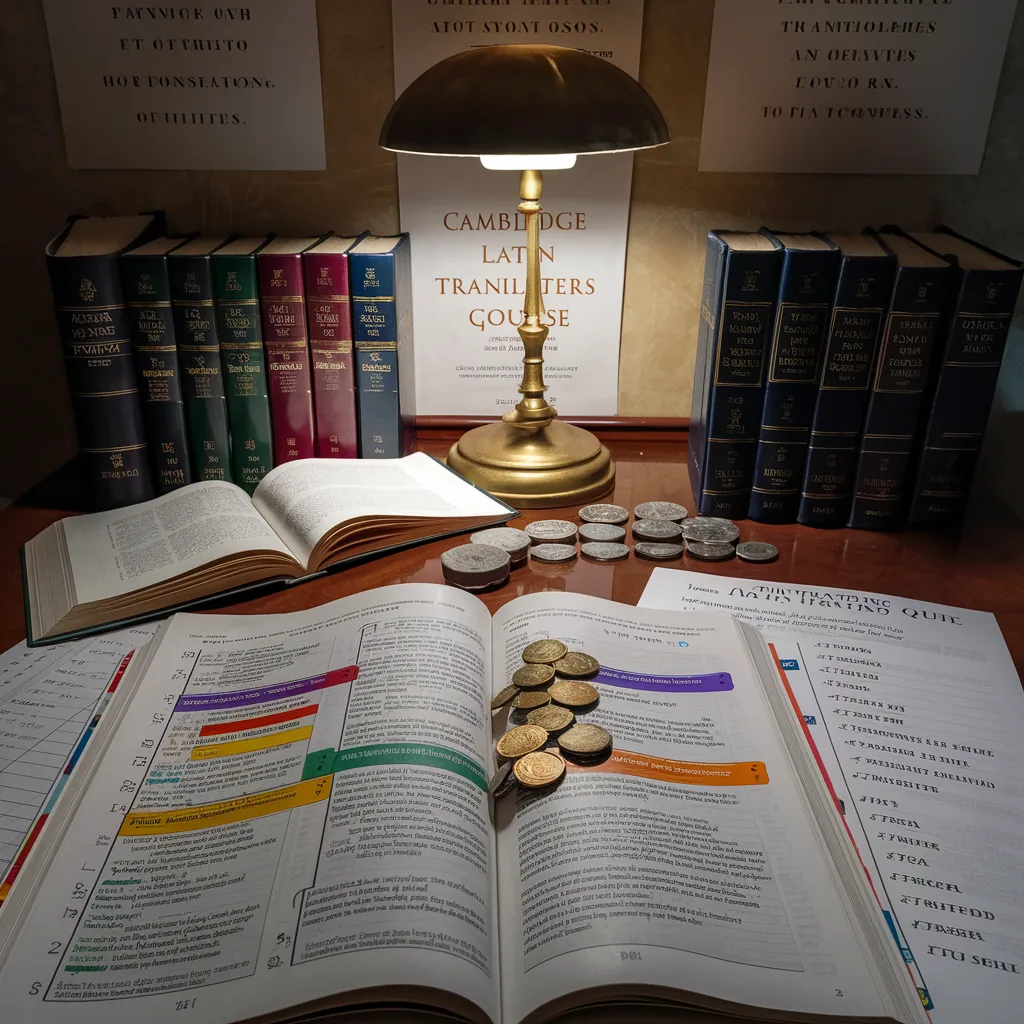
The Cambridge Latin Course – A Modern Approach to Learning an Ancient Language
The Cambridge Latin Course is one of the most widely used and respected programs for learning Latin in schools around the world. Developed to make the study of Latin more engaging and accessible, it represents a shift away from traditional rote memorization toward a more immersive, story-based method. For decades, it has introduced students to the richness of the Latin language while also providing deep insights into the culture and daily life of ancient Rome.
This article explores the origins, structure, teaching philosophy, and lasting impact of the Cambridge Latin Course.
📚 Origins and Development
The Cambridge Latin Course was developed in the 1960s and 1970s by the Cambridge School Classics Project, based at the University of Cambridge. The goal was to modernize Latin teaching and make it more appealing to students.
Before its introduction, Latin was often taught through grammar-heavy methods that focused on memorization and translation. While effective for some learners, this approach could feel dry and discouraging. The creators of the Cambridge Latin Course sought to change this by:
- Introducing Latin through continuous stories
- Emphasizing comprehension over memorization
- Connecting language learning with historical context
This innovative approach quickly gained popularity and has remained influential ever since.
🏛️ A Story-Based Learning Experience
One of the defining features of the Cambridge Latin Course is its use of storytelling. Instead of isolated sentences, students follow the lives of characters in the Roman world.
The course begins in the city of Pompeii, focusing on the household of Lucius Caecilius Iucundus. Through his family and community, learners encounter everyday situations that bring the Latin language to life.
As the course progresses, students explore other parts of the Roman Empire, including:
- Britannia
- Alexandria
This narrative approach helps students stay engaged while gradually building their understanding of Latin vocabulary and grammar.
🧠 Teaching Methodology
The Cambridge Latin Course uses what is often called a “reading approach”. This method prioritizes understanding meaning from context rather than memorizing rules first.
Key principles include:
- Contextual learning: Students infer meanings from stories
- Gradual grammar introduction: Rules are explained after exposure
- Repetition through narrative: Vocabulary appears naturally across stories
- Cultural integration: Language is taught alongside history and daily life
This approach mirrors how people learn modern languages, making Latin feel less distant and more approachable.
📖 Structure of the Course
The Cambridge Latin Course is divided into several units or books, each building on the previous one.
🔹 Unit 1
- Introduction to basic vocabulary and grammar
- Set in Pompeii
- Focus on everyday Roman life
🔹 Unit 2
- Expands grammar and introduces more complex sentences
- Moves to Roman Britain
🔹 Unit 3
- Explores new settings and cultural themes
- Introduces more advanced language structures
🔹 Unit 4
- Covers sophisticated texts and deeper historical topics
- Prepares students for higher-level Latin study
Each unit combines stories, exercises, and cultural background sections.
🌍 Cultural and Historical Insights
Beyond language, the Cambridge Latin Course provides a window into ancient Roman civilization. Students learn about:
- Daily life in Roman households
- Social structure and class differences
- Religion and beliefs
- Entertainment, including gladiatorial games
- Major historical events
For example, the eruption of Mount Vesuvius eruption of 79 AD plays a significant role in the narrative, adding emotional depth and historical realism.
🎓 Educational Impact
The Cambridge Latin Course has had a profound impact on classical education worldwide. It is widely used in:
- Schools in the United Kingdom
- Classrooms in the United States
- International educational programs
Its success lies in its ability to make Latin:
- Engaging rather than intimidating
- Relevant rather than outdated
- Accessible to a wide range of learners
Many students who might otherwise avoid Latin find themselves drawn into the subject through its storytelling approach.
💻 Digital Evolution
In recent years, the Cambridge Latin Course has expanded into digital formats. Online platforms and interactive tools now support learning through:
- Audio pronunciations
- Interactive exercises
- Digital texts and translations
- Classroom resources for teachers
These innovations ensure that the course remains relevant in a technology-driven educational environment.
🧠 Benefits of Learning Latin
Studying Latin through the Cambridge Latin Course offers several advantages:
📚 Language Skills
Latin improves understanding of grammar and vocabulary, especially in English and other European languages.
🧩 Critical Thinking
Translating and interpreting texts develops analytical skills.
🏛️ Cultural Awareness
Students gain insight into the foundations of Western civilization.
🧠 Cognitive Development
Learning a structured language enhances memory and problem-solving abilities.
⚖️ Challenges and Criticism
Despite its strengths, the Cambridge Latin Course is not without criticism.
Some challenges include:
- Less emphasis on explicit grammar instruction early on
- Dependence on teacher guidance for deeper understanding
- The need for supplementary materials for advanced learners
However, many educators view these as manageable trade-offs for increased engagement.
✨ Why It Stands Out
What sets the Cambridge Latin Course apart is its ability to balance:
- Language learning and storytelling
- Grammar and context
- Education and entertainment
It transforms Latin from a static subject into a dynamic experience.
🧾 Conclusion
The Cambridge Latin Course has redefined how Latin is taught and learned. By combining engaging narratives with a thoughtful teaching methodology, it has made an ancient language accessible to modern students.
Through its stories, cultural insights, and innovative approach, the course does more than teach Latin—it brings the ancient world to life. Whether used in classrooms or for independent study, it remains a powerful tool for exploring language, history, and human experience.