Chrysler Crossfire – A Unique Sports Car with Bold Styling and Mercedes Engineering
The Chrysler Crossfire is one of the most distinctive cars ever produced by Chrysler. Built during a unique partnership between Chrysler and Mercedes-Benz, the Crossfire combined American design ideas with German engineering under the ownership structure of DaimlerChrysler at the time.
Produced between 2003 and 2008, the Crossfire stood out for its futuristic styling, unusual proportions, and strong mechanical foundation derived from Mercedes-Benz components. While it was not a high-volume success, it developed a loyal following among enthusiasts who appreciated its uniqueness.
This article explores the design, performance, history, and legacy of the Chrysler Crossfire.
Origins of the Chrysler Crossfire
The Chrysler Crossfire was developed during the early 2000s when Chrysler and Mercedes-Benz were part of the same corporate group, DaimlerChrysler. This partnership allowed Chrysler to use Mercedes platforms and engines for some of its vehicles.
The Crossfire was heavily based on the first-generation Mercedes SLK platform, sharing:
- Chassis architecture
- Engine components
- Transmission systems
However, Chrysler designed an entirely new body and interior concept, giving the car its own identity.
The goal was to create a premium American sports coupe that could compete with European rivals while maintaining distinctive styling.
Exterior Design – Bold and Controversial
One of the most talked-about aspects of the Crossfire is its design.
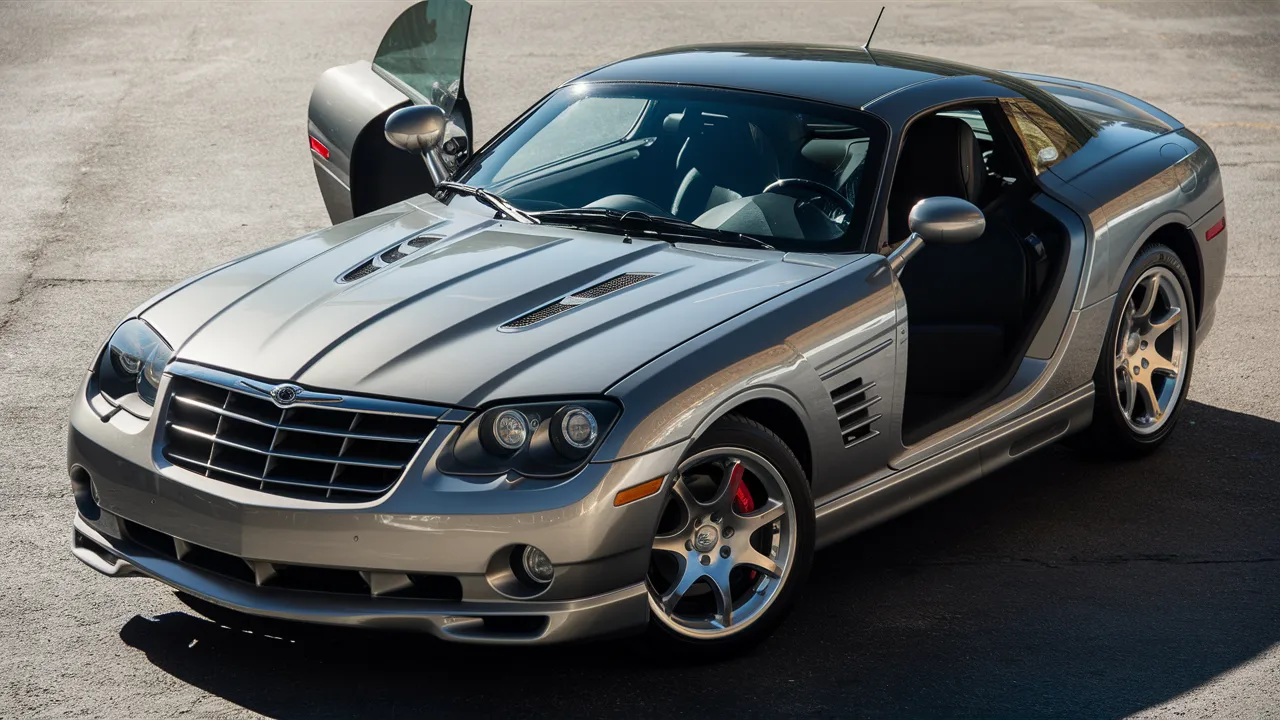
Key exterior features:
- Long hood with short rear deck
- Wide rear fenders
- Distinctive “crossed” body lines
- Boat-tail rear styling
- Large alloy wheels
The design was created by the Chrysler Advanced Design Studio in California. Its name “Crossfire” comes from the intersecting lines on the bodywork, especially the rear design where two prominent ridges form a cross-like shape.
Design reaction:
- Some praised it as futuristic and bold
- Others considered it unusual or polarizing
Despite mixed opinions, the Crossfire is still instantly recognizable today.
Interior Design – Simple and Functional
Inside, the Crossfire features a driver-focused but relatively simple cabin.
Interior highlights:
- Leather-trimmed seats
- Circular air vents
- Central infotainment system (basic by modern standards)
- Mercedes-style switchgear
- Compact cabin layout
Because of its Mercedes foundation, many interior components feel solid and well-built. However, compared to modern sports cars, the technology feels minimal.
The seating position is low, giving a sporty driving feel, though cabin space is limited.
Engine and Performance
The Chrysler Crossfire was not designed as an extreme performance car, but rather a balanced grand tourer with sporty characteristics.
Engine specifications:
- 3.2-litre V6 engine
- Around 215–330 horsepower depending on variant
- Mercedes-sourced engine and transmission
- Rear-wheel drive layout
Performance:
- 0–100 km/h in around 6–7 seconds
- Top speed approximately 240 km/h
- Smooth and predictable acceleration
While not a supercar, the Crossfire delivers solid performance for everyday driving and highway cruising.
Crossfire SRT-6 – The High-Performance Version
A more powerful version of the car was introduced under the SRT (Street and Racing Technology) division.
Chrysler Crossfire SRT-6 highlights:
- Supercharged 3.2-litre V6 engine
- Around 330 horsepower
- Improved suspension and brakes
- Faster acceleration (0–100 km/h in ~5 seconds)
The SRT-6 model significantly improved performance, making it a much more serious sports car compared to the standard version.
Driving Experience – Balanced and Smooth
The Crossfire is designed more for grand touring than aggressive track performance.
Driving characteristics:
- Stable highway cruising
- Comfortable ride for a sports coupe
- Precise but not overly sharp steering
- Rear-wheel-drive balance
Because of its Mercedes-derived platform, the car feels solid and well-engineered on the road.
It is particularly enjoyable for relaxed driving rather than extreme cornering.
Handling and Suspension
The suspension setup is tuned for comfort with a sporty edge.
Handling features:
- Independent suspension system
- Rear-wheel drive balance
- Low center of gravity
- Stable cornering performance
While not as sharp as modern sports cars, the Crossfire offers predictable handling that inspires confidence.
Technology and Features
For its time, the Crossfire offered a reasonable level of equipment.
Features include:
- Power-adjustable seats
- Climate control system
- Basic infotainment system
- Premium audio options
- Stability control systems
However, compared to modern vehicles, the technology is minimal, reflecting its early 2000s design.
Practicality and Limitations
The Crossfire was not designed as a practical family car.
Limitations:
- Very limited rear visibility
- Small cargo space
- Tight interior space
- Only two seats
It is best suited for:
- Enthusiasts
- Weekend driving
- Collectors
- Style-focused buyers
Market Position and Competitors
The Chrysler Crossfire competed in a niche segment of stylish sports coupes.
Main rivals included:
- BMW Z4
- Mercedes-Benz SLK
- Audi TT
Compared to these competitors, the Crossfire stood out for:
- Unique American-European design blend
- Strong Mercedes engineering foundation
- Lower pricing in many markets
However, it struggled to match rivals in brand prestige and long-term market demand.
Why the Chrysler Crossfire Was Unique
The Crossfire is remembered for several reasons:
Key uniqueness factors:
- Rare collaboration between Chrysler and Mercedes-Benz
- Distinctive and unconventional styling
- Limited production numbers
- Strong mechanical reliability
It is a car that does not blend into the background, which contributes to its lasting appeal among collectors.
Reception and Criticism
The Crossfire received mixed reviews when it was launched.
Positive feedback:
- Strong build quality
- Stable performance
- Eye-catching design
- Affordable entry into sports coupe segment
Criticism:
- Limited interior space
- Outdated technology
- Polarizing styling
- Not as sporty as rivals
Despite criticism, it has gained appreciation over time as a unique automotive experiment.
Legacy of the Chrysler Crossfire
Although production ended in 2008, the Crossfire remains an interesting chapter in automotive history.
It represents:
- A rare cross-brand engineering project
- A bold attempt to redefine Chrysler’s design identity
- A bridge between American styling and German engineering
Today, the Crossfire is often seen as a niche collectible rather than a mainstream sports car.
Conclusion
The Chrysler Crossfire is a distinctive and unconventional sports car created by Chrysler during a unique collaboration with Mercedes-Benz. While it was never a mass-market success, it stands out for its bold design, solid engineering, and memorable character.